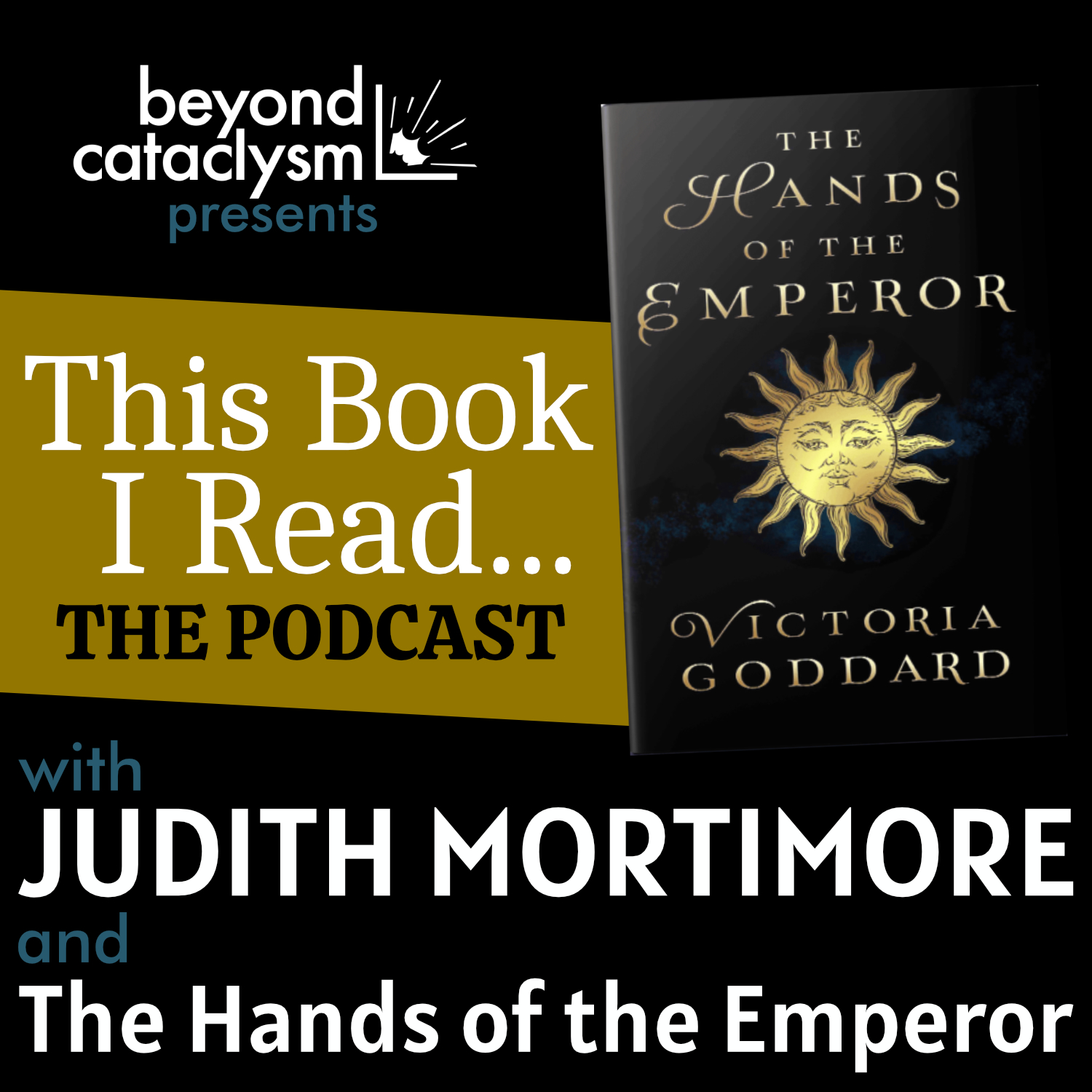
This month CM Lowry is talking to author Judith Mortimore, about The Hands of the Emperor by Victoria Goddard in ‘This Book I Read...’
Topics covered include:
Judith reads veraciously and found that
The Hands of the Emperor stood out so profoundly that she went off and read everything else by Victoria Goddard
The Hands of the Emperor is about a bromance, a plutonic relationship between two male characters, The Emperor and His Secretary. It's a cosy, joyful and lyrical story about loneliness, friendship and a meeting of cultures.
Goddard's writing style makes for ease of reading, Judith had just completed a re-read that only took her 14hrs to cover all 700 odd pages!
The beauty, tension and deeply involved relationship between The Emperor & The Secretary
Judith's favourite think about The Hands of the Emperor is how different it is - I doesn't conform to any of the writing structures that are enforced upon authors. She also enjoys how delightful the characters are - they are utterly real and relatable.
The Hands of the Emperor takes place in a world that has experienced some sort of cataclysmic event, known as The Fall, but that is not a somewhat idyllic place where there is a lot of kindness. This places the book within the Cosy Sci-fi sub-genre of science fiction writing.
Judith highlights a couple of small issues with the book, some her own and some brough up by others. Some people feel it is a …

This month CM Lowry is talking to author Juliet Kemp, about The Dispossessed by Ursula K. Le Guin in ‘This Book I Read...’
Topics covered include:
Ursula K. Le Guin's hero status amongst fans of Speculative Fiction and Sci-fi
The mind blowing impact it has had upon Juliet's life
The two planets of Anarres & Urras and the contrasts between them - both in terms of flora & fauna but also in terms of political and social systems.
Sometimes subtitled 'An Ambiguous Utopia',
The Dispossessed explores themes of late Capitalism, Anarchy & Time. It's a very political story.
The idea that revolution is a continual process, and something that we as individuals must embody and encapsulate
The concern that structures, even within anarchist societies, can be calcified and rigid, not allowing for the transmission of new ideas - so it's everyone's jobs to continue to be alert and continue to advance the revolution.
The way that Le Guin uses two story lines that start out disconnected but end up converging
Juliet's favourite things about the book, including the beauty of Le Guin's writing and the detailed working out of what an Anarchist society might look like in practice.
Juliet's challenges with
The Dispossessed, such as the dryness of Le Guin's writing at times and the heavy going philosophical content. There are also issue surrounding Le Guin's gender portrayals, which can in part be explained by the times it was written in (1970s), and the fact that …
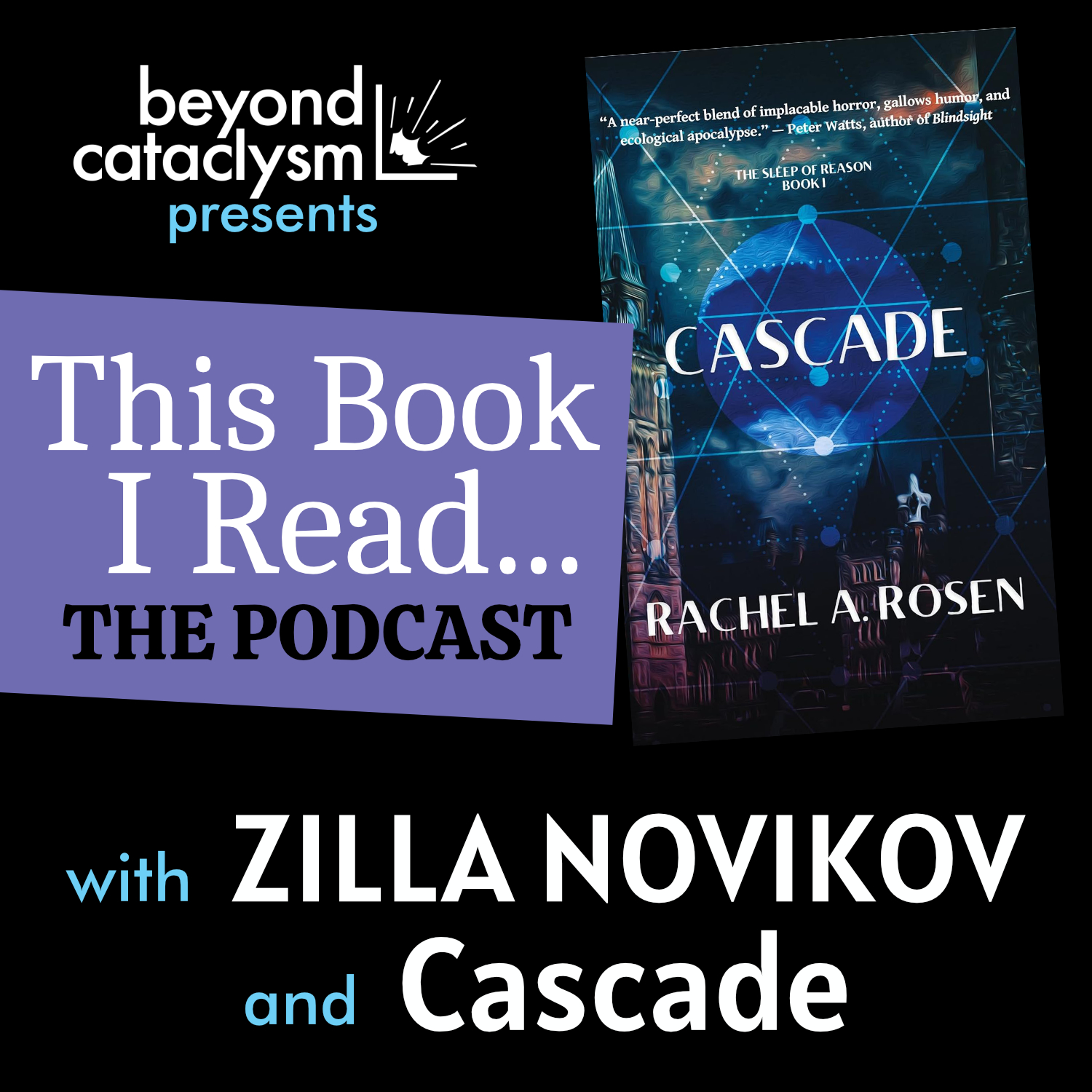
This month CM Lowry is talking to author Zilla Novikov, about Cascade by Rachel A Rosen in ‘This Book I Read...’
Topics covered include:
The premise of the book, which is that people are trying to affect change and fight against an impending crisis from within the existing power structures and, unaspiringly, this doesn't go too well.
The use of dark humour in
Cascade to deal with the serious socio-political issues of our times such as the rise of fascism and climate nihilism.
The use of magic to help the protagonists fight off these evils.
Rosen's includes of characters from various indigenous and marginalised people groups as a way to highlight their plight.
Zilla shares a quote, that really helps to illustrate how timely Rachel's writing was. None of us are out of harms way, we all need to be aware of changes going on in our world and how they can affect us.
The beauty of how human the characters in
Cascade are, and that they live daily lives, like all of us. This helps to fight against the dehumanisation and 'otherness' that often causes people to hate each other.
The cool way that magic works in
Cascade, and it's limitations. Instead of being liberating, magic can be incredibly frustrating. Rosen brings a certain sense of realism to the ways magic would affect everyday life, for example, being able to see every possible outcome causing the character huge amounts of anxiety and crippling their love …
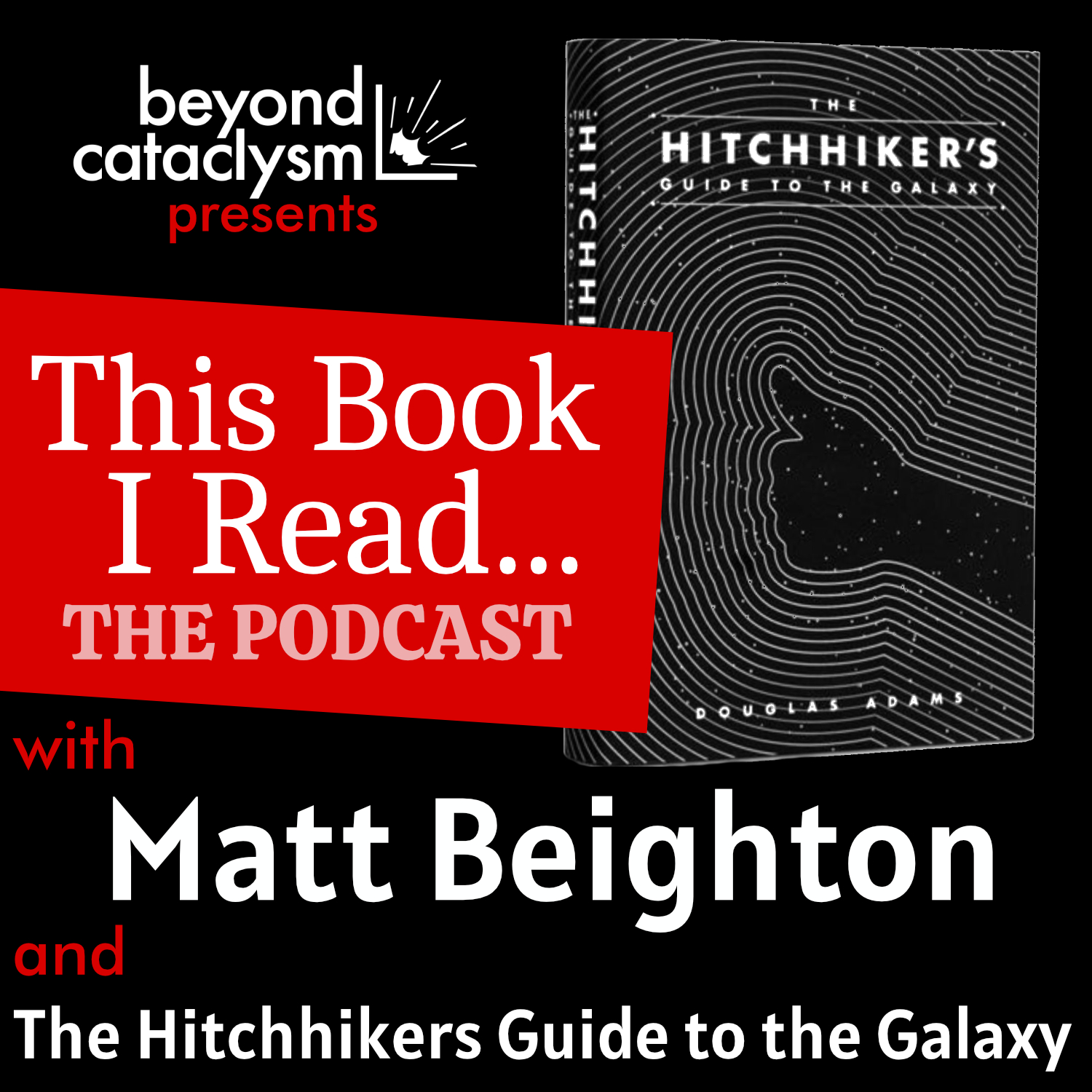
This month CM Lowry is talking to Matt Beighton, writer and game designer, about The Hitchhikers Guide to the Galaxy by Douglas Adams in ‘This Book I Read...’
Topics covered include:
The proper pronunciation of Matt's surname, along with how to pronounce the names of various small towns in England!
Matt describes
The Hitchhikers Guide to the Galaxy as: 'A surrealist quest across the galaxy, full of madness, satirical takedowns of 1980s Britain and a whole load of nonsense for 1500 pages'.
Matt shares some of his favourite quotes, that illustrate Adam's surrealist approach and strange obsessions (such as with towels!)
Nothing really matters - The main protagonist, Arthur Dent, doesn't learn anything over the course of five books. Adam's takes a very novel approach in that there is no redemptive story arc.
Adams is indulging a joke - authors never get to just go off on three page tangents, but He does. This is pretty unique and takes a certain disciple - to purposefully not develop the characters at all.
The Probability Drive & Adams' amazing mastery of the
Deus Es Machina writing device - explaining things away but in really bold and exciting ways rather than it feeling like lazy or boring writing.
Matt discussed some of the aspects of the book that are somewhat problematic now, including how dates some of the cultural references (digital watches?) feel now.
The tedium of reading some of the rambling, longer and stranger passages. Reading all five books …
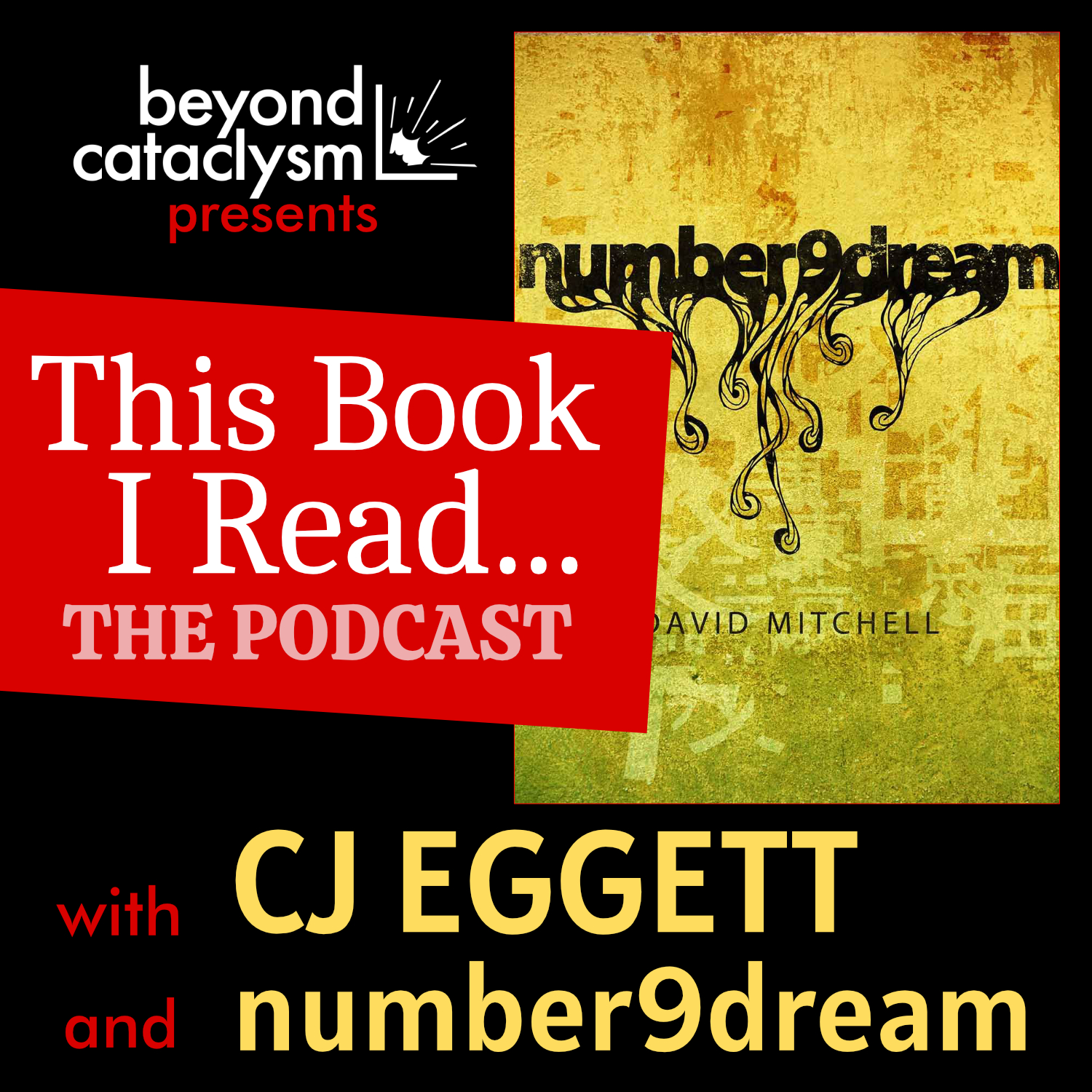
This month CM Lowry is talking to CJ Eggett, writer and game designer, about number9dream by David Mitchell in ‘This Book I Read...’
Topics covered include:
The common confusion between David Mitchell the author and David Mitchell the comedian of Peep Show fame!
Mitchell's use of modern magical realism to sort of lull the reader into a false sense of security before tricking them.
Using similar literary themes throughout the book to pull the reader back to central themes.
Mitchells clever use of language to capture the imagination of the reader.
Intertextuality - full living worlds of things and stuff that connect with each other between texts. Or objects placed with a text that connect the created world with out real world.
The process that Mitchell works with to create as authentic an experience as possible for his settings and characters.
CJ encourages us to hunt out number9dream and read it because, in his opinion, it's David Mitchells best book. It's wildly underrated, full of fun and high drama.
Stories within stories within stories, like Russian dolls!
Links to things we discussed:
CM Lowry's latest Kickstarter Project
Four Borg
MORK BORG
The Lord of the Rings Trilogy by JRR Tolkien
Cloud Atlas by David Mitchell
The poet
Anne Carson
The Man in the High Castle by Philip K Dick
Making History by Stephen Fry
House of the Spirits by Isabel Allende
What I talk about when I talk about running by Haruki Murakami
A Wild Sheep Chase …
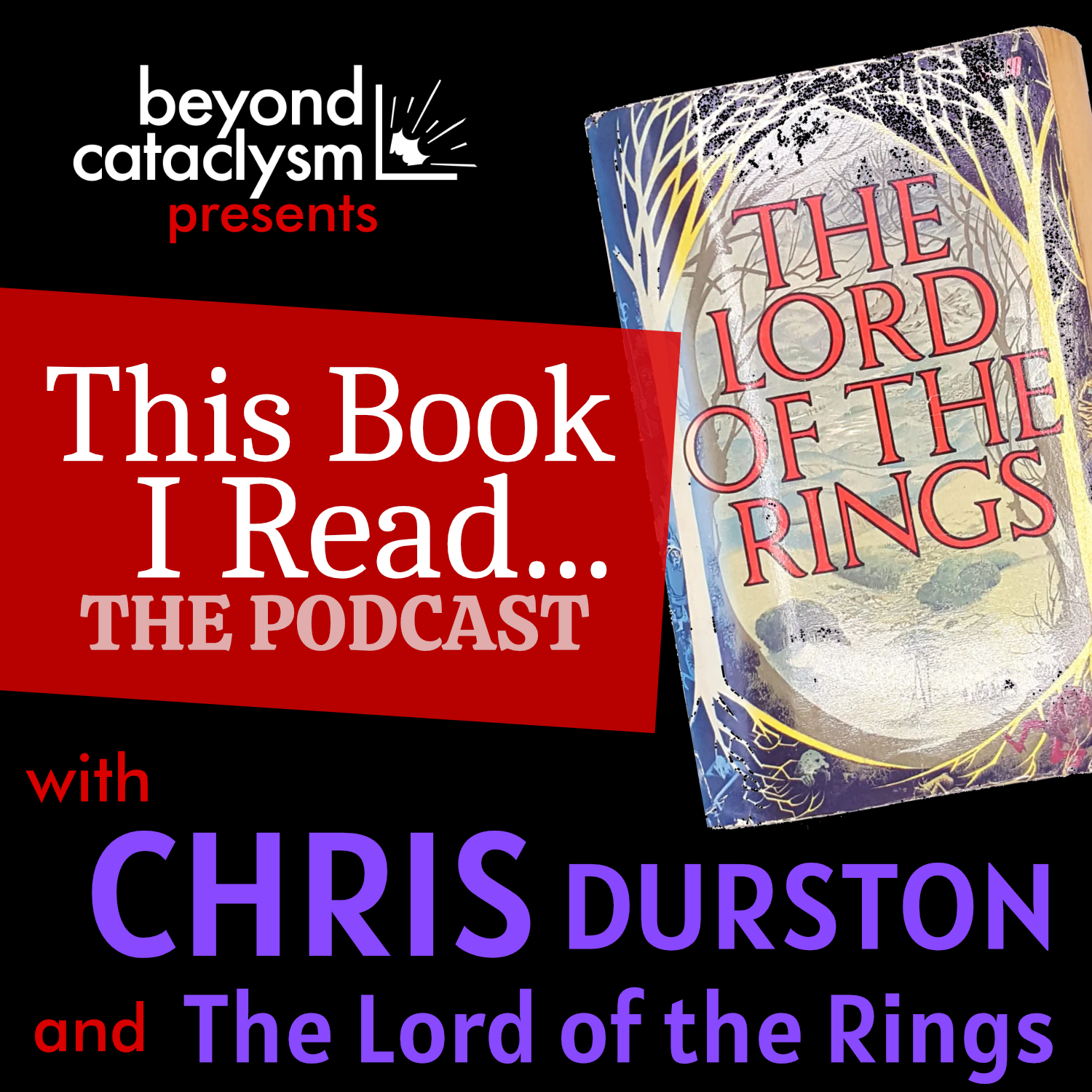
This month CM Lowry is talking to Chris Durston, author of Chronicles from the World of Guilt, about The Lord of the Rings by JRR Tolkien in ‘This Book I Read...’
Topics covered include:
Being old enough to remember the internet before Wikipedia existed, writing stories on early PCs and reading the Yellow Pages
Re-reading childhood classics to the point of the covers disintegrating and how much harder that is to do as you get older and your time becomes more constrained
Tolkien's love of linguistics and how his languages shaped the world of The Lord of the Rings as well as the various races that exist within the world.
Accents within fiction writing and how they can bring the character to life immediately. Tolkien tends to use patterns of speech instead of phonetic accents to communicate character.
The least heroic character in The Lord of The Rings is the one that makes it all happen and watching the heroic characters doing everything they can just to give the Hobbits a little bit more time to destroy the ring.
Extra-natural characters within The Lord of the Rings such as Tom Bombadil and Gandalf, whom Tolkien used as illustrations of the fact that something does exist outside of the ordinary. These contrast beautifully with the very normal lives of the hobbits who concerned themselves only with where second breakfast was coming from.
Magic in The Lord of the Rings is far more soft than people expect - …
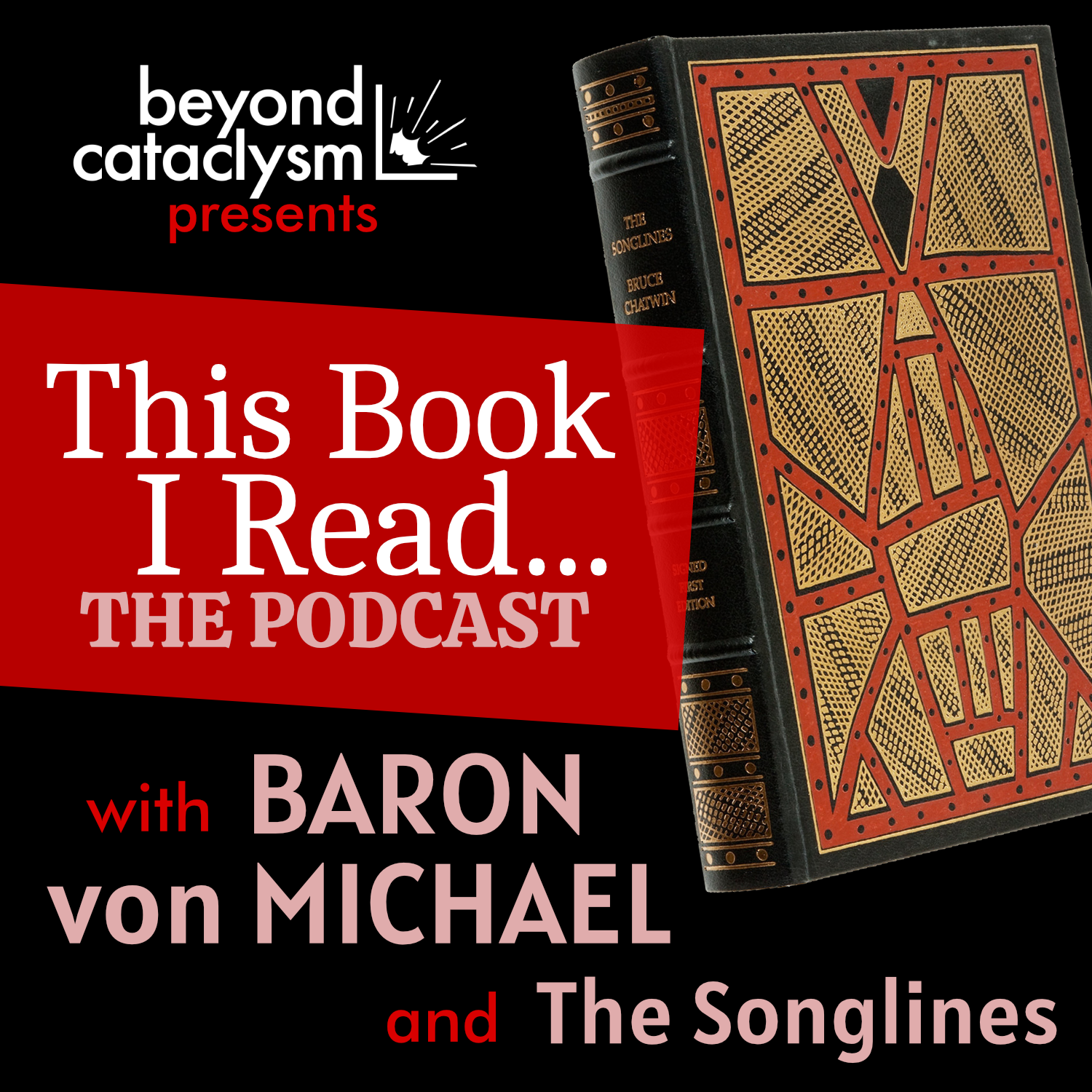
This month CM Lowry is talking to Baron von Michael, author of Professor Elemental Roleplaying Games, about The Songlines by Bruce Chatwin in ‘This Book I Read...’
Topics covered include:
Bruce Chatwin's use of flippant anecdotes, quotes and stories to explore deeper themes
The broken nature of this book and how the small pieces make up his greater thesis on life - that you need to be moving and discovering things in life; that our problems stem from a lack of this.
The need to return to big ideas as a society - that philosophy and ethics are not just things to neatly package into a box and leave on a shelf.
Travel as a hopeful antidote to the harms of life.
Wider themes of roleplaying and identity; combining inspirations along your our personal journey
Links to things we discussed:
Professor Elemental's
Garden of Escapades
Escape from Elemental Manor
The Songlines by
Bruce Chatwin
Zen and the art of Motorcycle Maintenance by Roger M. Pirsig
Through Painted Deserts by Donald Miller
The Wisdom of Stability by Jonathan Wilson-Hartgrove
Troika by Melsonian Arts Council
Operation S.A.N.T.A. by CM Lowry
Dictionary of the Khazars by Milorad Pavić
Civilisations by Laurent Binet
Music by CM Lowry. Editing by Dave Emmerson
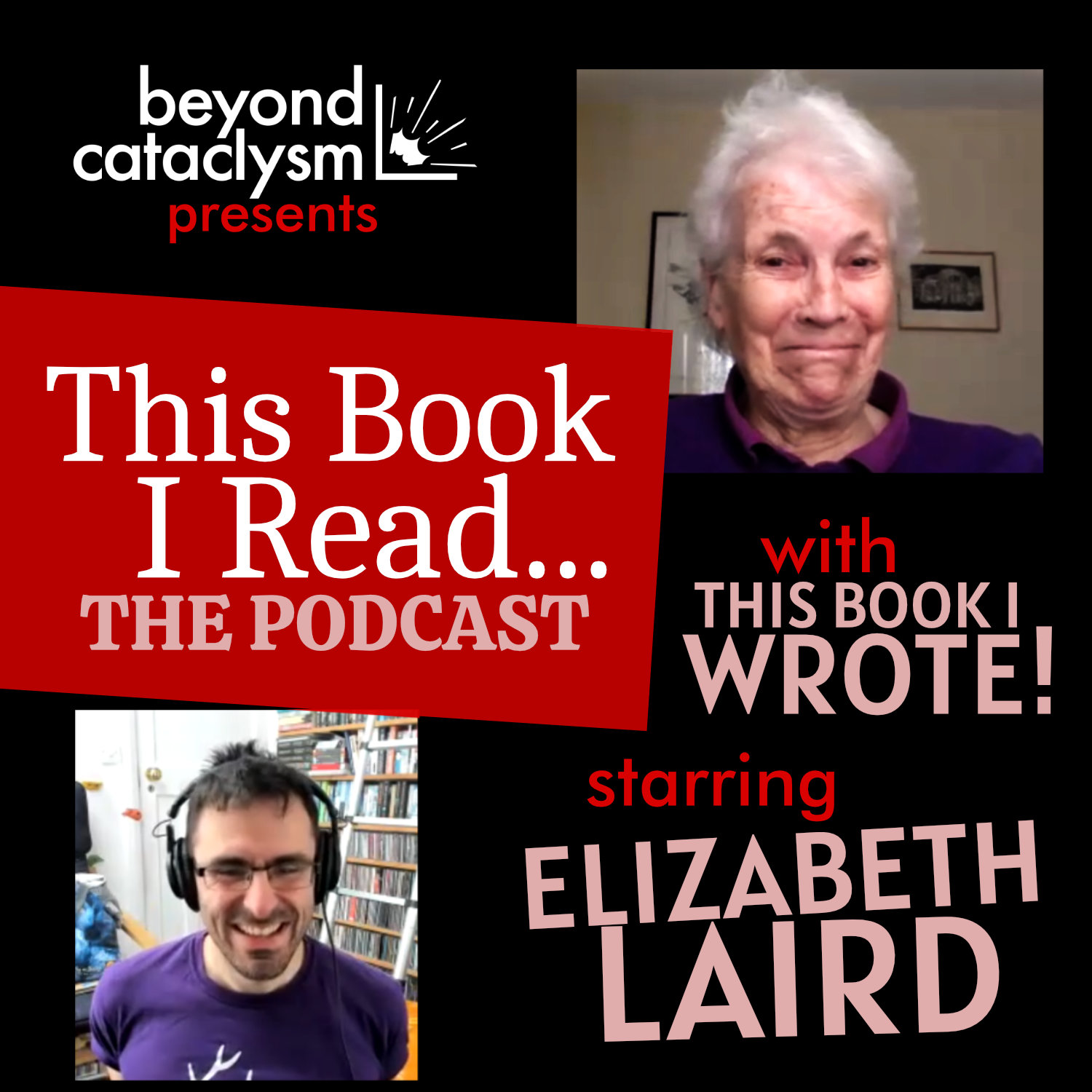
This month CM Lowry is talking to his childhood hero Elizabeth Laird - globetrotter, adventurer and author. They talk all about her life and how it has influenced the many books she has written in ‘This Book I Read...’
Topics covered include:
Elizabeth's 1989 children's book,
Crackers, and the important role in played in CM Lowry's journey into writing and publishing
Becoming an author, and career changes in general, later in life and how it's never too late to try something new
Using life experiences as inspiration for writing
Befriending the street children of Addis Ababa and taking them for road trips in her car on Saturdays
Haile Selassie's pet Lion
Living in places where cataclysmic things are happening & how that influences the creative process
Dodging bullets in Lebanon and getting a seat on the last plane out at the civil war kicked off
How our childhood reading stays with us for life & meeting her hero Geoffrey Trease.
Letting the characters come to life and dictate how you write the story
Elizabeth also left us with some wonderful life advice
Read: Everything you can get your hands on
Listen: To everything and make notes. The best writers listen to conversation in order to learn how to write dialogue
Write: Everyday. Keep a journal
Live: Do things, take risks, don't be afraid to really live
Links to things we discussed:
Elizabeth's first novel
Red Sky in the Morning
Elizabeth Laird -
The Garbage King
Roald Dahl - …

This month CM Lowry is talking to Jacob Wood, creator of Accessible Games Quarterly, about Frankenstein by Mary Shelley in ‘This Book I Read...’
Topics covered include:
The challenge of looking at a book so well known - and misrepresented - in popular culture.
The Beast within; making monsters vs. being a monsters.
Chat-GPT and the unleashing of monsters into the world
A changing lens of disability - Jacob's relationship with the book as he lost his sight.
Steampunk as a modern concept; when your book is written in 1818, things that appear anachronistic are actually contemporary!
Links to things we discussed:
Frankenstein by Mary Shelley
Shrek
Beyond Cataclysm - a "micro-publisher"
Accessible Games
LP Hartley's
The Go Between
Bram Stoker's
Dracula
Free Wrench series by Joseph R. Lallo
Music & Editing by CM Lowry

This month CM Lowry is talking to author and games historian James Wallis about A Void by Georges Perec in ‘This Book I Read...’
Topics covered include:
The excitement of creating stories within the worlds that others have designed.
Constrained creativity, and the Oulipo literary movement.
How games and role-play create wonderful narrative and encourage creativity.
The challenge of books that ask a lot of the reader, yet are incredible still to refer back to - "
One for your library section".
Links to things we discussed:
Sonic in the Fourth Dimension
Oulipo - the French constrained writing collective
A hundred thousand billion poems
Hennimore's Hoard of Haiku in the Beyond Cataclysm store
Life: A User's Manual by Georges Perec
The Exeter Text by Georges Perec
All Quiet on the Western Front/Nothing New in the West by Erich Maria Remarque
Everyone is John RPG
The Raven by Edgar Allan Poe
Article discussing
Auto-hit into Into The Odd by Chris Mcdowall
Riddley Walker by Russell Hoban
If on a Winter's Night a Traveler by Italo Calvino
Ocean of Stars by John Dodd
Ludonarrative Dissidents podcast
Bluebeard's Bride RPG by Magpie Games
Music & Editing by CM Lowry
